|
|
|
 |
Scientific Name: Crotalus durissus
culminatus
|
|
Geographical Range: Southwestern
Mexico from
Michoacan to the isthmus of Tehuantepec to Argentina.
|
|
|
Habitat: Dry, open Savannah
|
|
|
Diet in the Wild:Warm-blooded,
Rodents and
Lizards.
|
|
|
Conservation Status: Protected
|
|
|
Location in the Zoo: Herpetarium
|
|
|
Physical
Description:
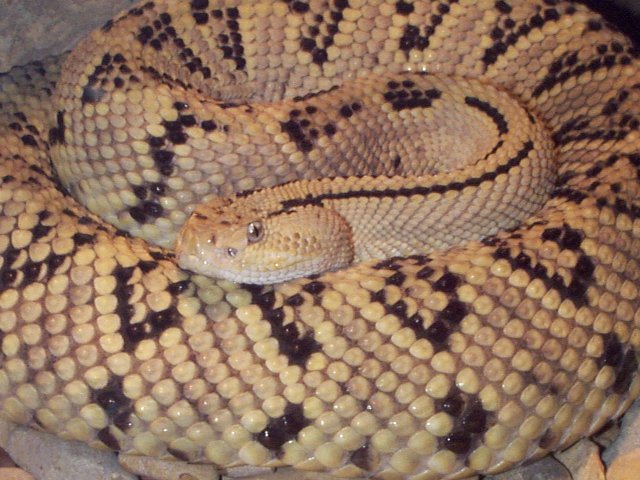
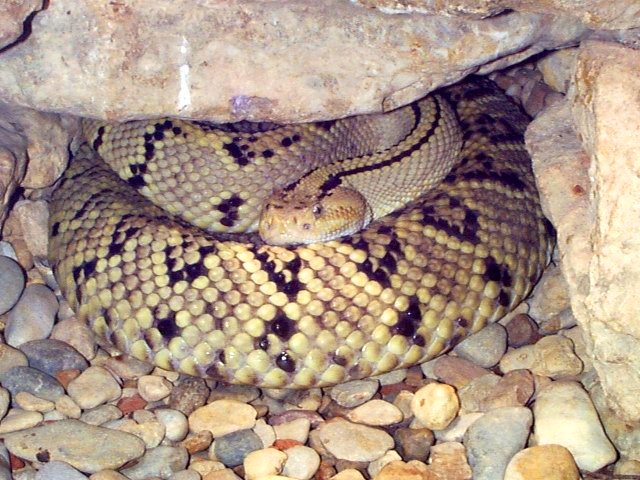
This snake is light gray with diamond patterns down the
back. It is heavily bodied all over. It weights
about 8 pounds and is 4ft long.
This snake
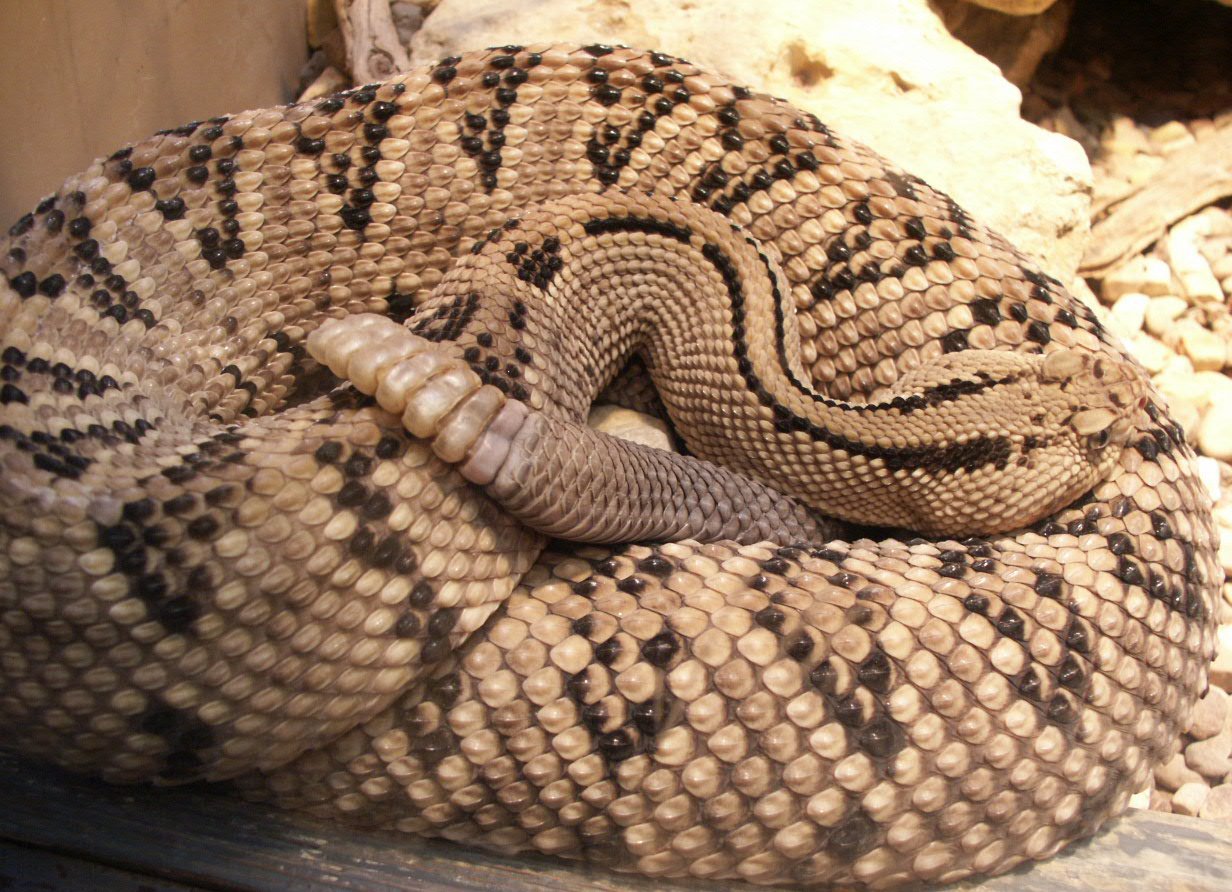
is called a rattle
because of its rattle at the end of its snake. At birth
snakes have a
pre-button and everytime a
snake sheds its skin, a new rattle is formed. after two or
three
sheddings the rattlesnake is able to produce the
typical
rattlesound.In the wild, the rattles are betweeen 8-11 segments because
longer rattles get caught in between rocks and will break
off. In
captivity, the can have rattles with up to
20
segments because of the protected enviroment.
|
Social
Organisation: The Northwestern neotropical rattlesnake is a
solitary animal. It spends most of its time alone; except during the
mating season when it goes around in search of a mate.
|
|
Special Adaptations:
The Northwestern Neotropical rattlesnake is
characterised
by its large size, pronounced vertebral ridge , and a highly potentent
venom. This rattlesnake delivers a large dose of venom through
long,
hollow fangs that fold back as the mouth is closed. When the snake
strikes,
the fangs fully extend, acting as two minature hypodermic
needles.
Typicaly, the pit viper possesses a a hemotoxic venom that damages the
tissue area surrounging the bite area. This species venom
contains
a high pecent of neurotoxins that are generally associated with Elapds
(Cobras, MAmbas, and Kraits) bites.This type of venom works primarily
on
the central nervous system in that it affects muscle control,
respiration,
and locomotion, and the sences. Symthoms may include mental
incoherence,
slurred speech, patial blindness, chills, numbness and tingling,
vertigo,
massive headaces abd difficulty in swallowing. The Northwestern
Neotropical
rattlesnake usually hunts at night using the infrared sensors located
in
the pit between its eyes and its nostrial to locate prey, hence the
name
Pit Viper. These pits are so sensitive as to detect a singe degree
variatiion
in temperature making warm blooded animals an easy target. The size and
venom toxicity of this species makes it a formidable predator, and is
considered a threat to man. |
 |
|
Reproductive Behavior:
|
The Animal at the Zoo:
|
 |
Page Author:
Sources and Links: 1.Fort Worth Zoo Infomational Palcard. |
|
|
|
