Special anatomical, physiological or behavioraladaptations: 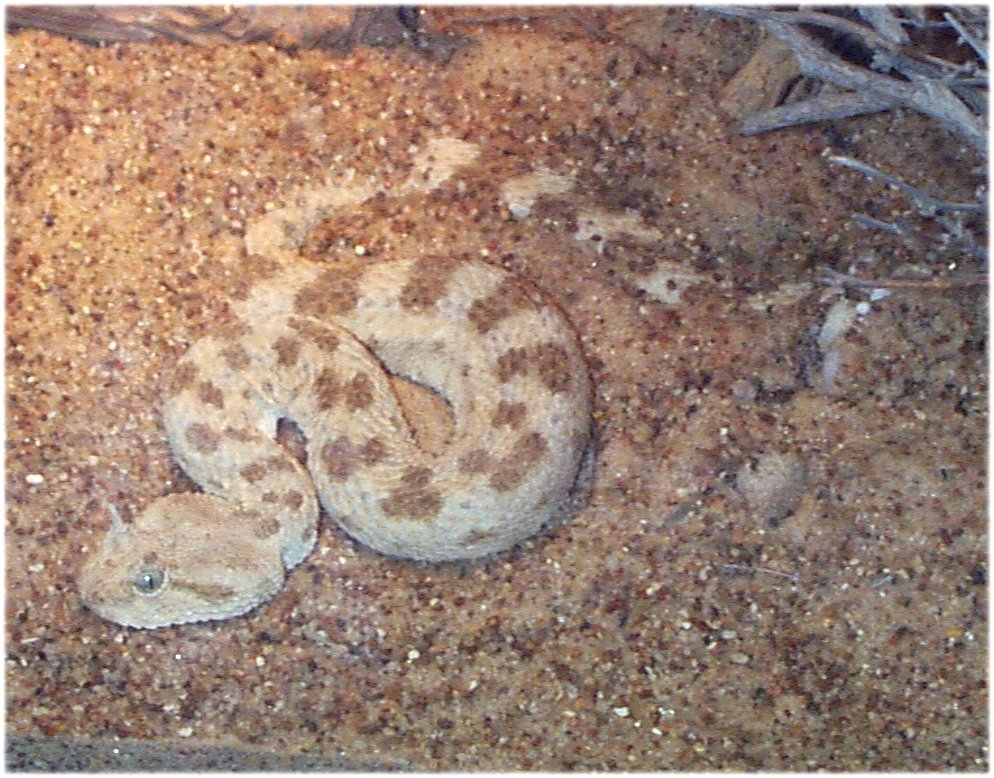
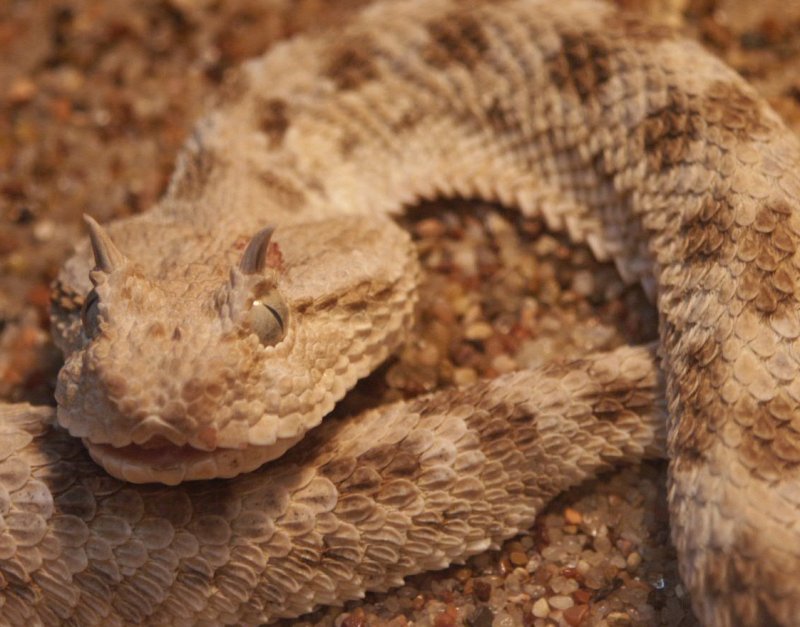
The "horns" on this viper may help to protect its eyes from injury or may simply contribute to the snake's camouflage.
The horned desert viper can burrow quickly into the sand by rapid sideways movements of its body, leaving only the head and eyes visible. However, in its natural environment, loose sand may not be available, and the snake will then hide under a rock or in the burrow of another animal.
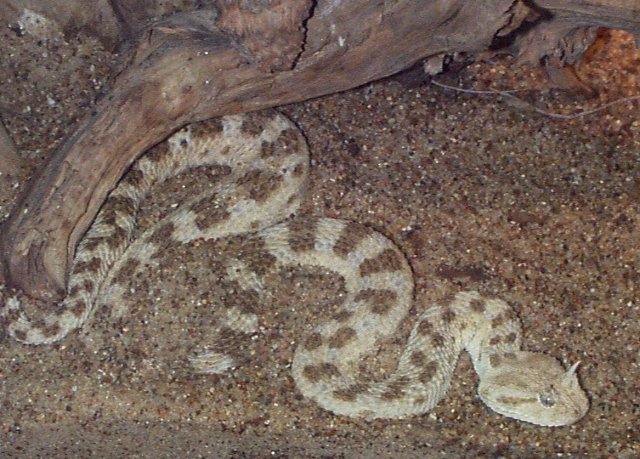
The color of the snake helps to camouflage it against sand or rocky ground, especially when it is partially buried. Cerastes cerastes is an ambush hunter, lurking quietly in a half-buried position until an unwary lizard or rodent comes within reach, and then lunging quickly to capture its prey.
Although this is not a rattlesnake, it can make a sound by scraping its scales against one another. The venom is hemotoxic.
 SabrinaNorris