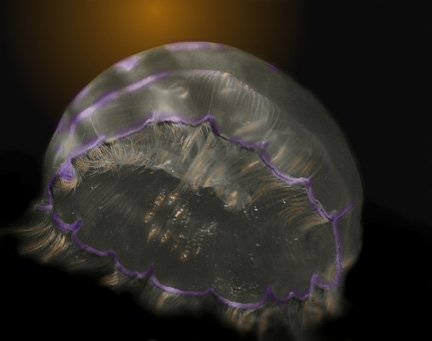
| Name: Jellyfish |
| Scientific name: Cnidaria Scyphozoa Aurelia |
| Location: Along both coasts of North America |
| Habitat: Tropical to sub-polar latitudes |
| Status: Not threatened |
| Diet: Fish, marine invertebrates, zooplankton |
| Location in the zoo: JamesR. Record Aquarium |
| Physical description: Range from 2 to 40 centimeters; some can reach up to 2 meters in diameter. Largely water (94% to 96%) with thick jelly layers. Radially symmetric. |
| General information: Jelly fish begin as polyps with tentacles and look like an anemone. As adults they have a body-form called a medusa. It is a bell-shapewith trailing tentacles. The jellyfish swims by contracting and relaxingmuscles around the edge of the bell. |
| Special anatomical, physiological orbehavioral adaptations: The radial symmetry in the jellyfish allows the ability to sense bothfood and possible danger on all sides. This is beneficial becausethe jellyfish is not a fast swimmer. The tentacles of the jellyfishbear cnidocytes or stinging cells. These are used for defense andalso to capture food. |
| Comments about the Jellyfish of the FortWorth Zoo.
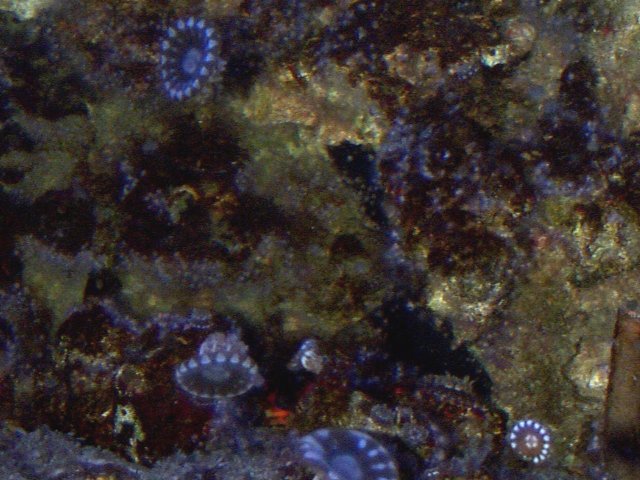 Upside-down Jellyfish at the Fort Worth Zoo |
| Personal Observations: The jellyfish is very graceful as it pushes itself through the water.The Monterrey Bay Aquarium has a very large display of jellyfish with ablue background. This gives the jellyfish the appearance of glowingin the dark. Moon Jelly at the Fort Worth Zoo. |
| Source Materials and Related Links: http://www.MontereyBayAquarium.org |
| Page author: Pam O'Toole smotoole@yahoo.com |  WhoZoo Home AnimalIndex |