|
|
| Name: Yellow Tang Scientific name: Zebrasoma flavesenes Range: Warm waters of the Pacific ocean Habitat: Pacific plate, north of the equator from Japan to Hawaii at depths of 3 to 46 meters Status: Not threatened Diet in the wild: Herbivore, wild grasses, algae, and other plant life in general. Diet in the zoo: Herbivore diet Location in the zoo: James R. Record Aquarium |
| Physical description:
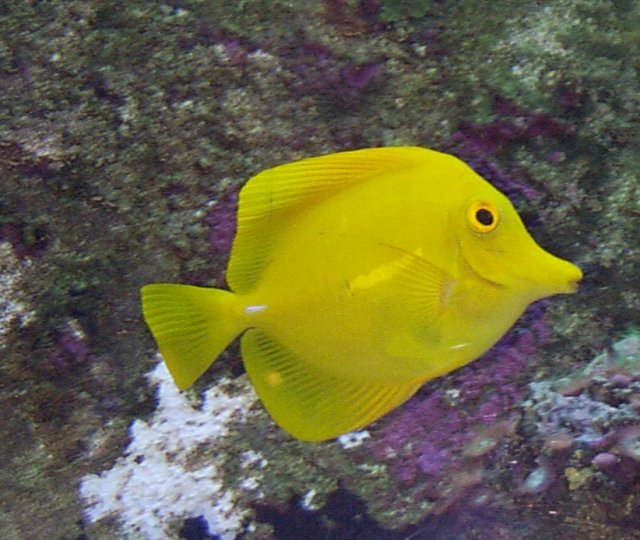
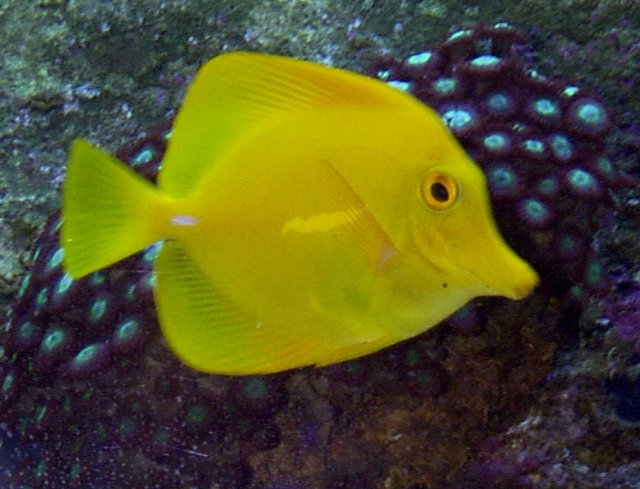
Varing in size from 1/4" to 8", bright yellow fins and body are the trademarks of the yellow tang. Small, tightly packed scales on the body give the fish a velvetly appearance. The sharp spines near the tail are used for defense and as an anchor in the rocks when sleeping. |
| General information:
The yellow tang is a grazing fish with a diet of almost anything that is green (ie. alge, grass, lettuce...). It is not unheard of for the fish to eat meat. Even though this fish is generaly an herbivore the tang has been known to eat shrimp and other smaller animals. This varying diet may even include excrements from other fish. This small fish is very territorial; especially in the presence of another tang fish. The yellow tang is also in the sergeant fish family. The tang fish does not require a lot of space in which to live. But please take in mind when using the tang in an aquarium that it needs a constant flow of water. Not much but some, it helps the fish stay in shape and keeps the fish in good health. |
| Special anatomical, physiological or behavioral adaptations:
The short snout has evolved for the specialized task of grazing on algae which grows on rocks. The mouth and surrounding skin has toughened to withstand the impact with the rough reef surface. Like other fish in the sergeant fish family they have a number of small spines protruding near their tail. The spines near their tail is how they got their name, also commonly called the scalpel fish. As mentioned above the spines on the tail serve dual purposes as a means of defence and as an anchor while sleeping |
| Source Materials and Related Links: |
| The New Saltwater Aquarium Handbook,by George C.Blasiola II; 1991 Barrons Educational Series Inc.; 250 Wirless Blvd., Hauppauge, New York, 11788 |
Page author Lori Wood |
|