|
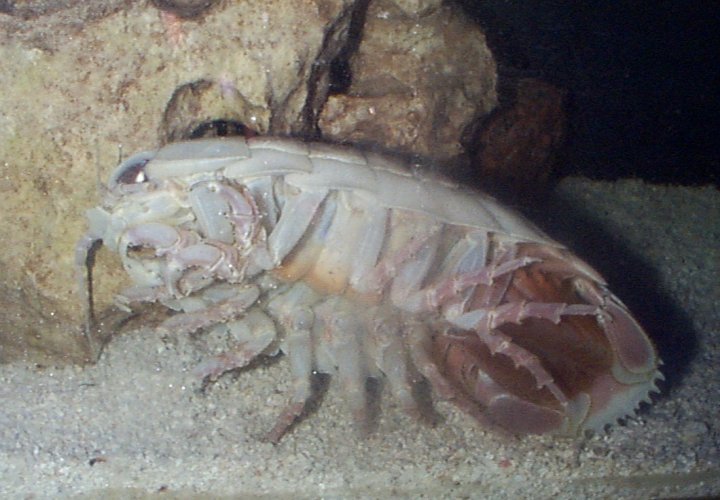
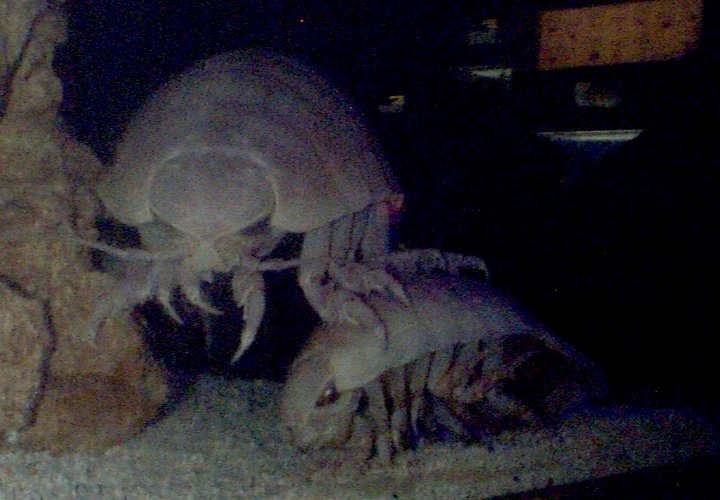
Name: Deep Sea Isopod |
| Scientific name: Bathynomus giganteus | |
| Range: Bay of Bengal, Arabian Sea, Gulf of Mexico, and the South Western Atlantic off Brazil. | |
| Habitat: Sea bottom (about 2000 feet) and also some have colonized freshwater habitats | |
| Status: Not Threatened | |
| Diet in the wild: fish, sponges, small crustaceans, nematode worms, protozoans. | |
| Diet in the zoo: Fish Food and Dried Shrimp | |
| Location in the zoo: James R Record Aquarium |
General information: |
Feeding and Development:The Isopods feeding habits are extremely diverse. Some groups are parasitic and some travel in large groups at night. They prey on diseased or injured fish and also attack fish that have been caught in commercial nets. They develop embryos in a direct matter within the female brood pouch and emerge as juveniles. Isopods are egg laying, but have no larval stages. The young are brooded in the female pouch. Some females can carry about 20-30 eggs.
|
Wild deep sea isopods are sometimes accidental passengers on remote operated vehicles in undersea explorations. This animal was picked up from an ROV operating at a depth of 8500 feet off the western coast of Australia (Thanks to Trevor McCarthy for these very interesting photos.)
Personal Observations: |
Source Materials and Related Links: |
Page author: |